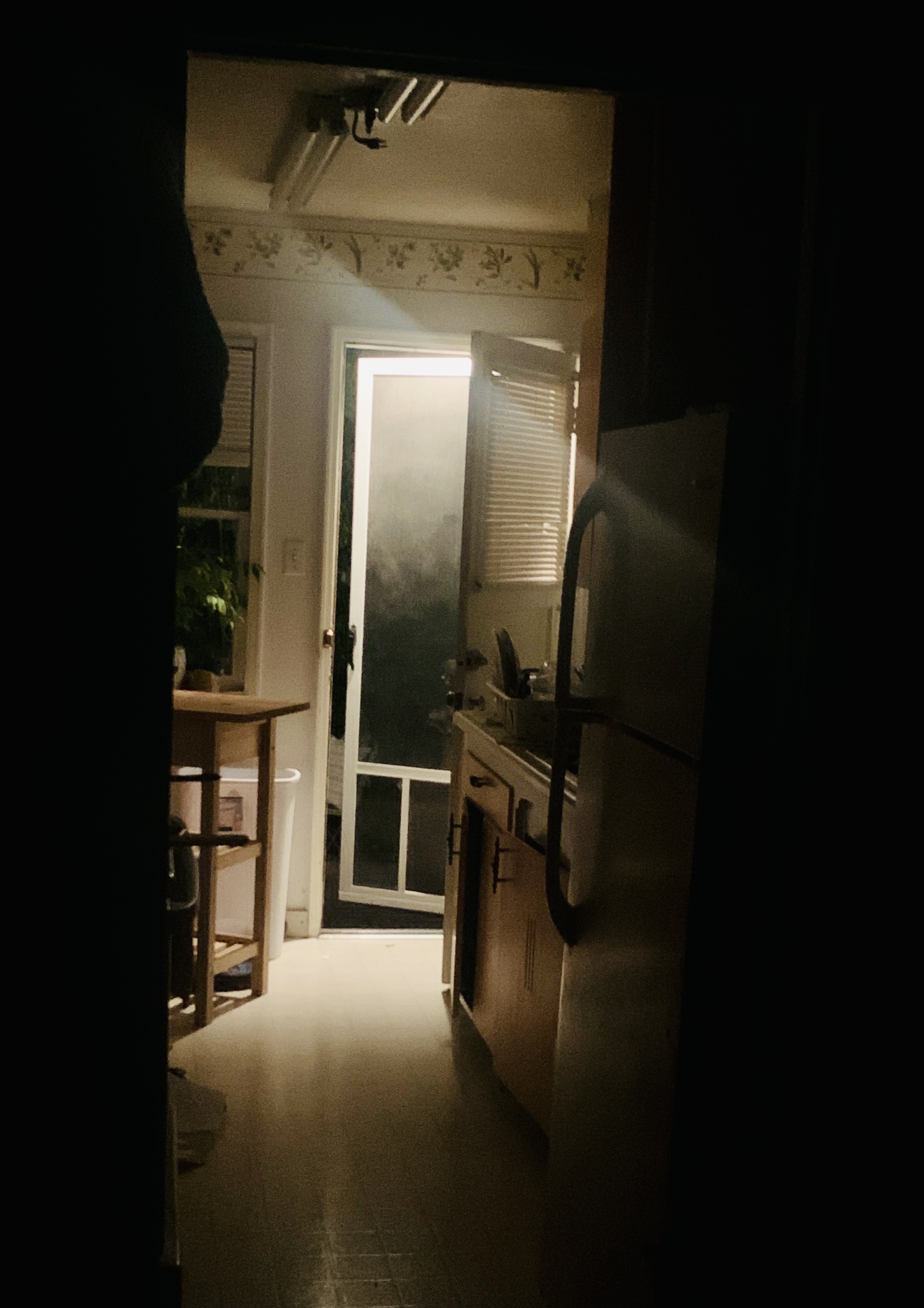
The face that emerged out of the bundle of paper, masking tape, and clay molded to a stick was not the face I had imagined. In fact, it was everything I did not want: angry, frightening, repulsive. The original image I had in mind was poignant and sweet, inspired by a guided walk into the nearby woods where I found a piece of twisted wood (oak?).
Its sharp protrusion gave me the idea of a duck beak, perhaps belonging to one of the warty Muscovy ducks that live in our mobile home park. At least twice a year, the females can be seen with eight to ten ducklings in tow, in the beginning. But despite their care and vigilance, they are not able to fend off the outdoor cats that hunt the park. As a result, this number quickly diminishes over the span of a week or two. And of the original brood, only perhaps one or two survive. It is a bittersweet and brutal reality that feels like grief. And this image was meant to be the beginning of my “Grief Puppet.”
The last few years have been notable for the presence of puppets in them. From puppeteering a Don Quixote marionette for a local community theater production to learning to build my own puppets to conceiving of a whole puppet musical that constantly overwhelms me, I have been pursuing my love of puppetry. It has been a practice of returning to childlike play, cultivating absurd imagination, and giving myself the permission to be silly. It has been a counterweight to the seriousness of life.
So when a friend sent me a link to a Grief and Puppets retreat I impetuously and ferociously said “YES” to a ten hour trip north to Southern Oregon. But as it turned out, none of us who attended knew what to expect, only that we all had felt a similar version of “I must go there.” All of us came with deep stories of loss and grief, some with wounds fresh and raw, others that were older and scarred, but each with real willingness to go on this strange and experiential journey of bringing form to our grief through the process of building a grief puppet.
Our retreat co-facilitators, Siobhan Asgharzazeh and Amy Sass, skillfully guided us in this process through storytelling, song, and movement. I found myself in unfamiliar terrain, connecting to my own experience in ways totally uncomfortable to me — how am I supposed to tell the story of my grief in movement? Or through clay? Growing up in a religion that prohibits dancing and is suspicious of art, I felt the culture shock of being in a space where “ritual” and “theater” live side-by-side as one thing. I did not know what I was doing there except that I just did my best to keep saying “YES.” By the second day of the retreat, the face of my grief puppet began to emerge and it was nothing like I had expected. Instead of relief, the rage I felt was almost immediate.
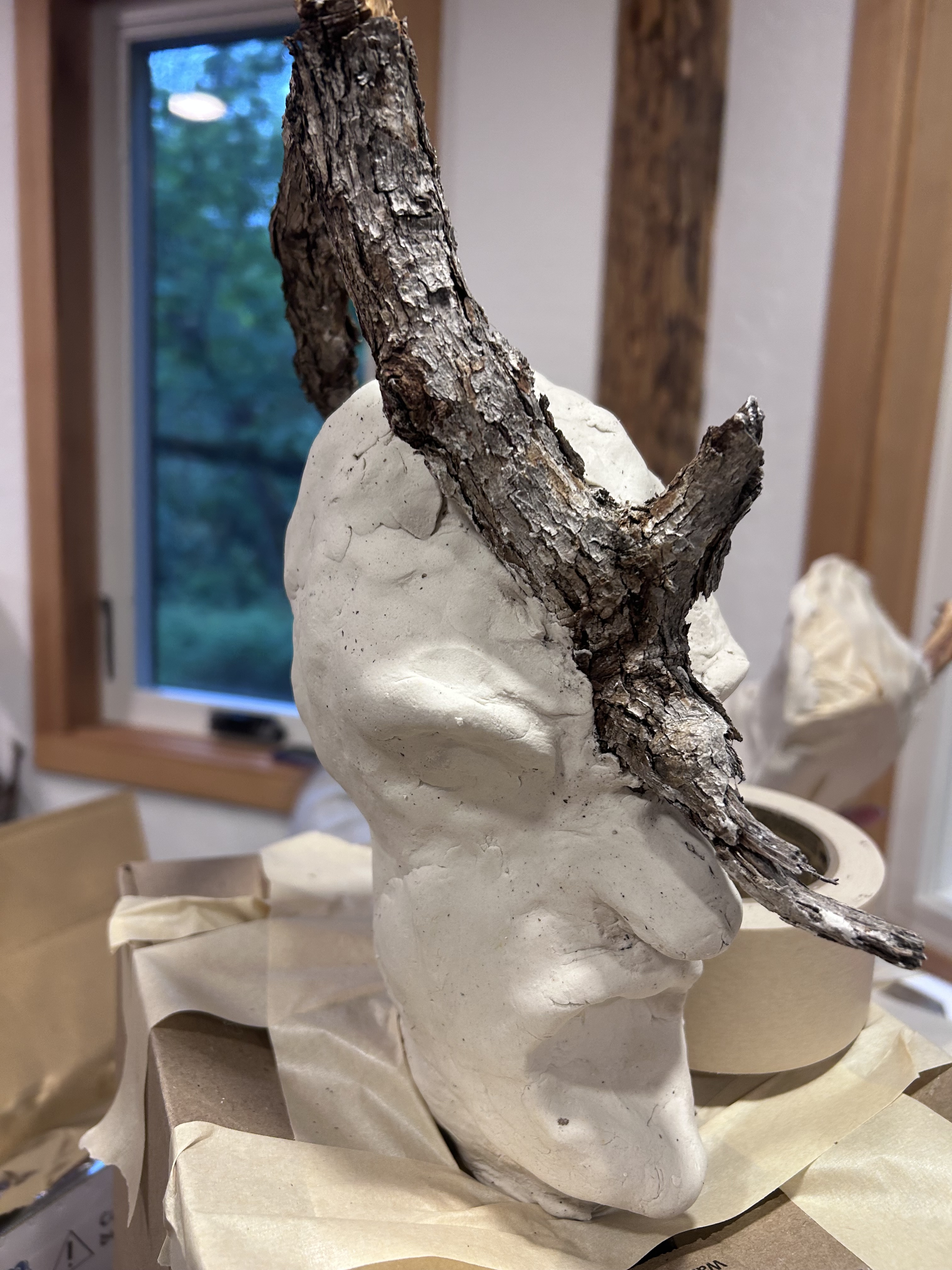
This narrow, ghastly face with a mouth of rage and anguish and a piece of wood impaled into its skull. This was not some kind of sweet grief bird. Instead, I felt like I had accidentally invoked the undead within me. And my own grief puppet threatened to stall my hard fought puppet joy of these last few years. I looked down at what I created and felt like my own love for puppets was being consumed by it.
Over the course of the week, we continued to create our grief puppets piece by piece, from head, to hands, to body. I had also brought with me leftover skeins of black yarn of different kinds from past projects. So in the evenings, I began to crochet a piece I intended to use for my grief puppet although I did not know exactly how, only that I wanted to imagine what it felt like to crochet my own grief as a net. I allowed myself to try something without a pattern and to feel how holes are operational within every stitch, how the gaps in a net are essential to its ability to stretch and hold weight without breaking. But grief also backtracks, skips entire rows, gets knotted in places.
Again, what I intended as a net became more like a shroud and added to the stark, haunted feeling of my grief puppet. So when the full puppet was finally complete, I felt like I had created a monster. I went to bed pursued by memories of death, from those belonging to people I have loved to those belonging to those whom I have cared for — often loved, in another way — as a chaplain. I grieved lost moments, times of helplessness in the face of anguish, missteps in my own judgment, ruptures in relationship to myself, to others, dread for the world. The eyes of the grief puppet appeared unblinking and unseeing. I couldn’t sleep that night.
The following day we were guided through rituals of acknowledgement and release which culminated at the river, gentle and cold. By a trick of light — or was it a gift? — the eyes of this undead creature I had brought to life now appeared closed. I could not unsee it.
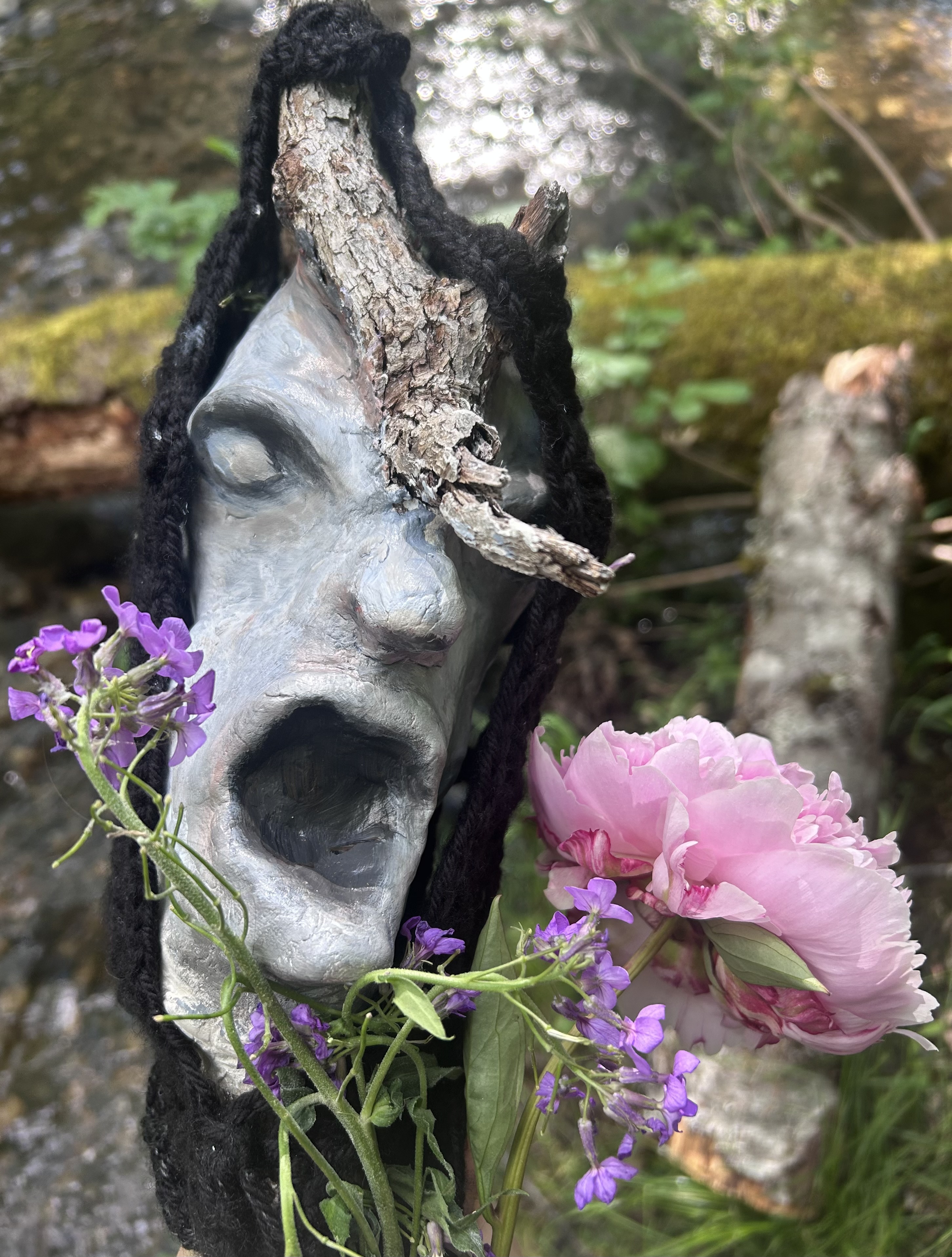
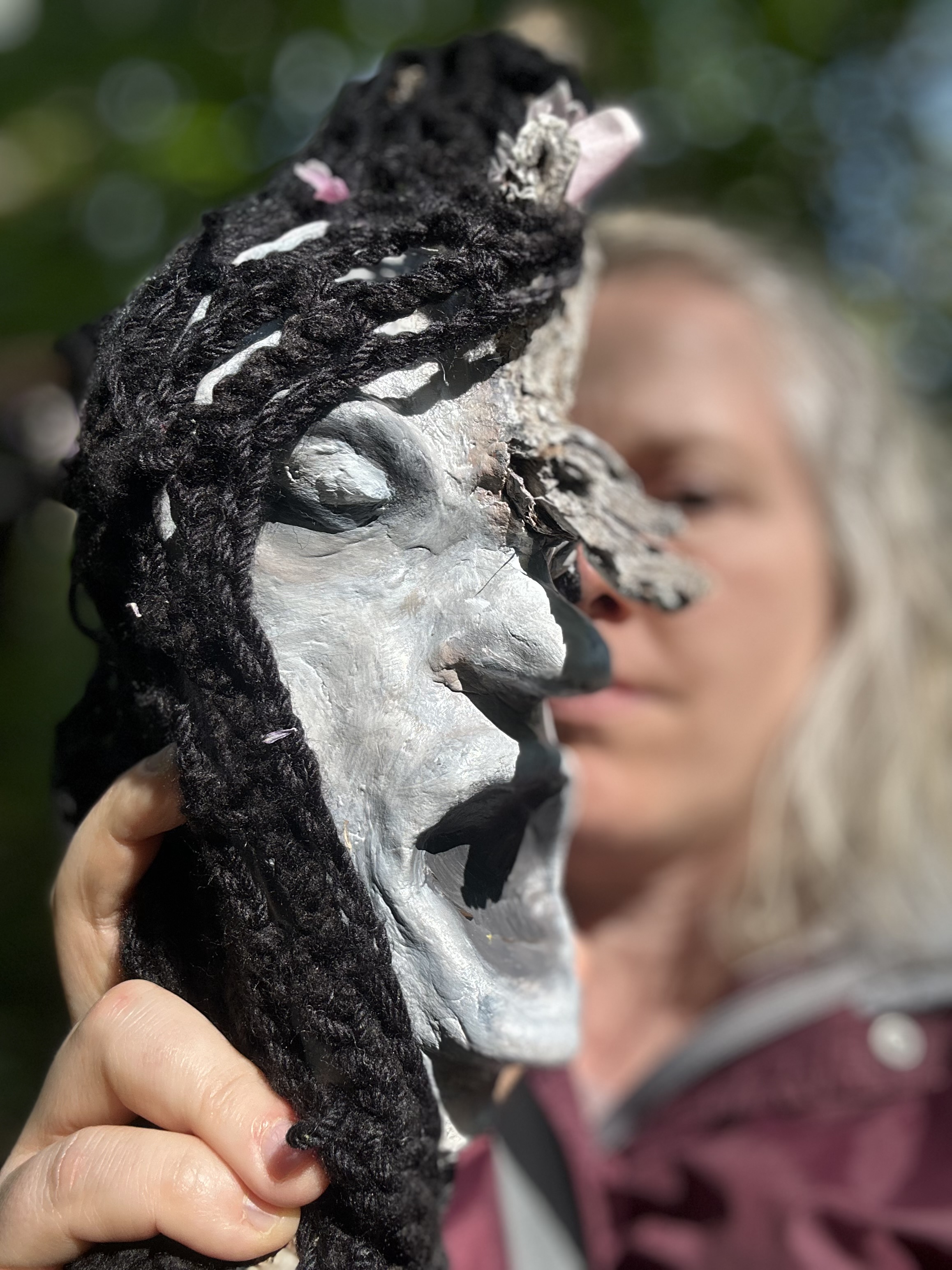
This strange being and I could both now rest. I tangled my fingers in the black yarn and carried my grief puppet like a purse. I found it could suddenly tell jokes at breakfast: “I woke up from the dead for this! We don’t have bagels in the afterlife!” And when I needed to cry, I cried. The grief and joy all knotted together.


Leave a comment