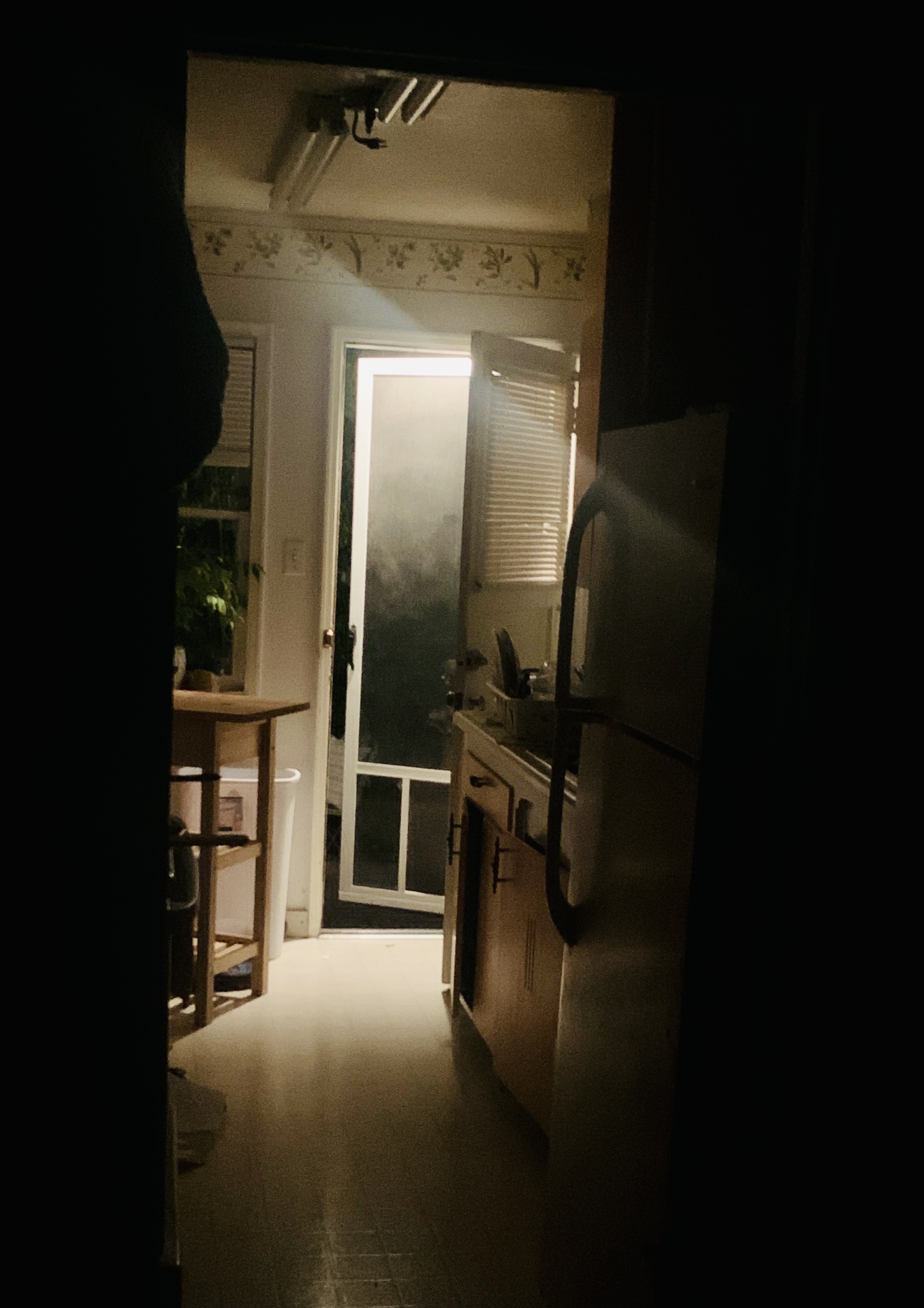
According to the Alzheimer’s Association, the number of people living with Alzheimer’s and dementia in the United States may triple by 2050, from the staggering 5 million people afflicted at present to as many as 16 million. Even now, it is unlikely any of us can avoid being touched by this disease at some point in our lives–either as a patient or caregiver. In 2050, I will be 73 years old. So when I walk into a nursing home on a beautiful, sunny day to visit a hospice patient and I see the same line of dementia patients that I saw the day or week before sleeping in their wheelchairs or silently watching the cars drive by outside, sometimes a rush of urgency overcomes me as I remember this could be me one day. And a voice with the clarity and fierceness of RuPaul’s famous refrain shouts at me in my head: You better live.
To be constantly reminded that the human lifespan is a cluster of years easily numbered, if you are lucky, by two or three flats of eggs, is not really how I expected to spend my life 9-5. But I’ve always preferred the company of old people to people my own age so it’s not surprising I ended up in this work, either. Though it does make me wonder what will happen to my social life when I grow old. Either my social anxieties will fall away and I will suddenly understand what to do with myself at the Christmas party besides anxiously hoarding the buffet table or my present discomfort whenever I hear elderly women in a nursing home being catty and mean to each other will solidify into the full and horrible realization that junior high never ends, thereby causing me to spend my elder years much in the same way as I did when I was 13: avoiding people and looking for snacks. But for now, I just visit nursing homes.
As the saying goes, growing old isn’t for weaklings. The longer you live, the longer you outlive everything nearest and dearest to your heart. The longer you live, the more you say good-bye and the more you live in a world without any of the familiar faces you once called home. I remember a long-retired postal carrier describing what it was like to walk the streets of the hometown where he once knew every face and they knew him and where he enjoyed recognition and regard wherever he went only to then walk those same streets twenty years later and realize he was now invisible.
The downsizing of a senior’s life that ultimately leads to moving into an assisted living or skilled nursing facility is, for some, a self-guided process. For example, there are elders who voluntarily relinquish their driver’s license and all the freedoms attached to it when they realize on their own that changes in their vision and reaction time mean they are no longer able to drive safely. But for many, it feels forced upon them and they will fight to hold onto their driver’s license even as their family is forced to hide the keys. Either way, the narrowing process reminds me of the scene in Star Wars when Han Solo, Luke Skywalker, Princess Leia, and Chewbacca get caught in the Death Star’s trash compactor. It is horrifying to know that the walls are truly closing in on you and there is no way out. Oh, and there’s also a giant snake called death sharing the space with you.
Many seniors spend the last months and years of their lives in nursing homes. My grandmother is doing that very thing right now. Before you think I am about to tear apart nursing homes, let me tell you how grateful I am for them. Judgments abound about those who place their loved ones in a skilled nursing environment as selfish and neglectful. I know people who will say, oh I would never do that to my loved one. But unless it’s a road you’ve traveled, you really don’t know what you will do and what your limits might be. By the time someone needs skilled nursing care, there are few families that can absorb the financial and practical cost of providing around the clock care on their own.
Yes, sometimes people in nursing homes don’t have family or friends who visit. (Although the same can be true for people who live in their own homes.) But there are countless spouses and children and friends who show up as often as they can, daily and weekly, sometimes for years, to bring in fresh laundry, help feed their father lunch, or talk about the grandchildren to their mother who many days doesn’t remember them. Elderly husbands and wives will make enormous effort, despite frequently living with health concerns of their own, to simply sit with their spouses. Some of the most romantic moments I’ve witnessed have taken place in a care facility. Like the time I saw an elderly couple sitting together at the nursing home, she with a pink paper crown, he with a harmonica. She hummed along as he played close to her ear. Or the day I met a couple married for almost 70 years. As she slept, her husband showed me a picture he always carries of her from when they were first married. When she awoke, he asked her if she would like a kiss. She nodded and then he proceeded to give her a kiss, and then another, each one a sweet but substantial moment of connection. These weren’t sexless little pecks on the mouth. These were the kisses of life-long lovers, intimate enough that I turned my head and considered leaving the room all together. No matter how much time and decay seep into their lives, I realized he will never stop kissing the woman in the picture.
And then there are the residents themselves who often form meaningful connections and community with each other. Roommates advocate for each other. Some might share the same room for months, even years. But whether their time together is brief or long, it is not uncommon for one to be rushed to the hospital in the middle of the night and never return. In nursing homes, friends can just disappear. And you can’t say good-bye.
One nursing home asked me to do quarterly memorial services at their facility. It moved me to arrive every few months and see the same group of residents always present, always honoring the dead–some of whom were friends but many of whom were only fellow travelers. Their numbers dwindled after a time. But for as long as there was a place to gather and vigil and remember, there were men and women coming together in one of the harder tasks of being in community.
There are terrible stories of sadness and isolation, too. These are stories of hearts and minds displaced from everything they have known and loved and thrust into a barren wilderness of desolation. On the last day of 2013, as I was visiting patients at one of the local nursing homes, I saw a woman sitting in her wheelchair and weeping. She wasn’t a hospice patient but I knew her from when her sister was on our service some years before. I remembered that despite being quite frail herself Callie* visited her sister in the facility every day. Now, it was her turn to live there. Staff were trying to comfort her so I went to visit one of my hospice patients. When I walked by Callie again an hour later I saw that she was now sitting alone, no longer weeping but still close to tears. I crouched down next to her and she began to cry. She said, I have no one. My children are dead. I’m the last of my sisters and brothers. My entire family is gone. There’s no one left. I want to die but can’t.
I looked into the pained depths of her eyes and saw there the terrible truth that yes, she was alone. Profoundly, truly alone. Of course, the theological part of my brain wants to retroactively correct this statement and affirm to her that she is never alone, that God is always with her, that she is held in love, you know, all those spiritual platitudes which I may actually believe but in the presence of this kind of grief sound like pure fiction. And for all I know they might be. For this woman, in this moment, it was a fact of the universe that she was alone in it.
I didn’t know what to say. I remember being silent with her for a time as I took in the existential horror of what she was saying. I think I eventually did say something but I have no memory of what it was. I’m pretty sure it was one of those moments in life when our words might as well be specks of dust in the air.
When I left the nursing home on the last day of that year, I did so newly sensitized to the ordinariness of suffering. It is already overwhelming to even try to think about the extraordinary suffering in this world: the wars, the genocides, the poverty, the devastation of our environment. So it’s almost impossible to consider all the ordinary suffering, too, the kind of suffering that permeates our air like pollen in the spring. It’s everywhere. The loneliness, the despair, the lostness, the lack of belonging, the grief, the anger, the anxiety, the desire to jump out of our skin all together. It’s hellish how ordinary it all is.
The following week I returned to the nursing home and found Callie sitting in the hallway again. Before that day, she always remembered me. We talked when her sister was on hospice and a handful of times since then and just the week before when she was in crisis. She knew who I was. But on this day she didn’t. Callie looked at me blankly. And for the first time, she showed no recognition of who I was. Whether this was a sign of dementia or just her psyche protecting itself, I don’t know. But if forgetting could be a curtain to block out the harsh light of her life, then I was grateful the curtain was closing over her mind. At least, for a time. Because she needed the rest.
Yes, Callie was alone. Still, I do not think I am reaching for Pollyanna comforts when I say that Callie was not alone in some very tangible ways. She may not have family. But she has caregivers. And that is no small thing. Nurses make sure she gets the right medicines and oversee her care. And certified nursing assistants make sure she gets bathed and has clean sheets. They make sure she eats and they will feed her themselves when she is no longer able to do so on her own. They will make sure to empty out her catheter bag or change her diaper when she becomes incontinent.
Being a CNA is literally a shitty job. Yet, as undervalued and difficult this work is (underscored by the fact that it is a low-paying job done mostly by women of color), it’s amazing to me to see how often it is done with kindness and patience. One might think with how much grossness and tedium is involved in the daily routine of caring for numerous people in the most basic tasks of hygiene and self-care that caregivers would become callous, detached, and even abusive. And we all likely know horror stories of when this has become true. But from where I stand–and I don’t claim to have omniscience on this subject–those stories stand far outside the norm.
More than once I’ve thought to myself that it gives me comfort to know that if I never have children, if I grow old without a network of support that is able to care for my needs, then there is high probability I will end up in a care facility where I will be truly cared for. And when I’m feeling especially morbid, I think about who I would like on my hospice team. A Death Dream Team, you might call it. And I think about the Hospice CNAs with whom I’ve been privileged to work most closely. Of any member of the team, our aides are the ones who most quickly cultivate relationships of trust and care with our patients, a phenomenon that is easy to understand when you think about the immediate knowledge you gain about a person the moment they place their hands on your body and how much more true this is when those hands reach out to help you at a time in your life when you are at your most vulnerable and helpless. More than once, as I’ve stood at the bedside of a hospice patient and watched them work, I’ve thought that the only prayer that was needed in that moment was the gift of their healing hands.
If you think about it, Mother Theresa was basically a CNA.
So I am very grateful for nursing homes and for the army of caregivers who every day take on tasks that most of us would never want to do. Nursing homes remind me that even as industrialized and materialistic and youth-obsessed as we might be, we haven’t yet reached a place in our collective consciousness where we think the best way of treating our elderly is to send them on one way trips to Mars for scientific experimentation. We are doing the much more civilized thing and taking volunteers for that.
For good and bad, however, nursing homes are also a mirror to our societal beliefs about aging and disability and dying. And that’s not a pretty image to look at.
Spend an hour in a nursing home with your eyes closed. Okay, that might be weird (and maybe illegal) if you don’t actually have somebody to visit. So don’t do that. But just use the power of your mind to imagine that you are living in a nursing home, that you have been in bed for days, maybe weeks, because the stroke has weakened your ability to even sit up. You pushed the call button fifteen minutes ago because your diaper is wet and you want to be changed. And you’re trying not to feel mortified. And you’re having pain. But no one has come yet. You can’t remember which day it is because the days are running together. You are in a room with two other beds. All three of you have televisions that are on at the same time with three competing channels, including a movie western with lots of shootouts and Fox News. Also, with a lot of shootouts. You would like to change the channel on your television but you can’t reach it at the moment so right now you are taking in the sounds of women and men screaming at each other as they wait with a raucous audience for Maury to open the envelope and tell us who the father really is. The call button makes an incessant beeping noise right outside your doorway. And that beeping sound joins an annoying chorus of other beeps traveling up and down the hallway. You wish you could go home.
This will be the way many of us will spend the last verses of the last chapter of our lives. If we’re lucky, maybe we’ll be in our own homes. But if you want to see how we as a modern society are preparing ourselves to die, spend an hour in a nursing home.
Of course, we are dealing with this reality the best way we know how; we are finding new technology to do it for us. For example, Japanese engineers have created an end-of-life robot to say comforting things to people as they are dying. Personally, it seems like a cruel joke to use robots to tell people they are not alone. But then again, who am I to judge our use of technology to address matters of the soul? As I write this, I am using an app on my phone to lock myself out of my Facebook account so that I don’t procrastinate by checking it 100 times a day. The app is appropriately called Self-control. I needed to download Self-control because I don’t have any of my own. So yeah, maybe we need robots to tell us we’re not alone.
And apparently, we’ve decided as a society that noise is a very helpful distraction from existential angst. This must be why we broadcast our loud, frenetic, fearful, angry news channels and reality TV shows into the rooms of people who are spending their days in an incubator of incremental loss. After all, we are only feeding them what we feed ourselves.
A few years back, Fox News was broadcasting a ceaseless stream of scary stories about the coming reign of fundamentalist Islamic law in places like Tennessee. (You either believe these stories are scary because you actually think fundamentalist Islamic law taking over Tennessee could be a real thing. Or you think Fox News is just scary. Either way, the stories were terrifying.) And one result of these stories being broadcast was that a patient of mine, a long-time viewer of Fox News, became terrified that Sharia law was being implemented in the nursing home. This paranoia may have signaled the beginnings of dementia for her because otherwise she was quite lucid. But she was careful to lower her voice as she warned me that the nursing home was beginning to punish people for not observing Sharia Law. She pointed at an elderly Latino woman sitting in her wheelchair in the hallway. Her right leg was amputated at the knee. See that, they cut off her leg, the patient said. That’s not Sharia law, I tried to explain. That’s diabetes.
You want to know something almost as scary as these Fox News stories? She was still voting absentee.
On another day, I walked into a residential care facility and saw a a group of elderly people with dementia sitting quietly around the television while it played “One Flew Over the Cuckoo’s Nest.”** My first thought was: who the hell is responsible for TV programming in this place? My second thought was to wonder if the residents saw from inside the dreamscape of their dementia any part of themselves mirrored back on the screen. I prayed to God they didn’t. But from years of working with this population, it’s easy for me to believe that at least a few did. I’ve learned to never underestimate the richness of the inner lives of people living with Alzheimer’s or dementia, no matter how fragmented and locked away those lives are from the outer world. Like a terrible hall of mirrors, I was watching a group of institutionalized people watching a movie about institutionalized people that ends with a vegetative state and death.
In this way, nursing homes are becoming digital babysitters. And this is not an insignificant part of how we are preparing for death.
But there is hope that things are changing, too. Nursing homes have improved their care over the last twenty years as certain reforms and accountability measures are now being implemented. That repulsive, distinct nursing home smell that I knew as a child when I visited my other grandmother in the nursing home after her stroke isn’t something I’ve encountered again. But better than improving the quality of care in nursing homes, there is some evidence on the horizon that the entire paradigm by which we will care for our elders when they are no longer able to care for themselves is radically shifting. In the Netherlands (of course), a new concept of long-term care for dementia patients is taking shape in a self-contained “village” where residents are able to enjoy a richer, more meaningful, and more personalized quality of life. It is no coincidence that this concept was developed by people who had worked for years as caregivers to people with dementia and that the result is a model of care that acknowledges and honors the inner lives and cultural histories of people with dementia.
If I am lucky, I will live long enough to struggle with these challenges of aging in this culture. But by then, I hope there will be more decisions I can make to affect the quality of my life beyond just stating my Advance Directive preferences for life-sustaining measures. Perhaps our Advance Directives can evolve to include our cultural and spiritual preferences. Mine would include at least the following:
- I direct my loved ones to ensure that I am never forced to sit in the TV lobby for hours at a time watching Maury Povich, Jerry Springer or any other television show that robs me of my soul and/or needlessly terrifies me (e.g. Fox News).
- Likewise, I direct my loved ones to ensure I am never forced to watch Nancy Grace, especially with the sound turned off. She looks like the commander of an alien space ship broadcasting instructions for Earth’s surrender.
- If possible, I direct my loved ones to ensure I will have a bed always near a window so I can look up at the sky. Hopefully, this means I will have a view of the night sky. Because the stars always comfort me.
- And because I am a little vain, I direct my loved ones to provide for a caregiver in my life who will be responsible for ensuring that my chin hairs are plucked on a regular basis. Unless I am combative about it. Then you can let the chin hairs grow. But please at least try. Maybe give some chocolate beforehand to see if that helps.
But if nothing changes and I am placed in a room with three beds with three televisions on at the same time, I still trust that I will be cared for. And that somehow, I will not be alone. Even if I am.
To me, nursing homes are a microcosm of life. And life is the ultimate incubator of loss. Inside that incubator we humans can be downright amazing at finding ways to care for and comfort each other when the world around us is falling apart. Every day I step into a nursing home, if I let myself see what there is to be seen, I leave knowing that everything I do now is, in some way, preparation for how I die. I know nothing about what will help this fractured, hurting world ameliorate the reality of extraordinary suffering. But in the world of ordinary suffering, there are so many little things that can be done to ease the pain of this life. Among the many things I’ve learned in nursing homes is to remember that even the most menial and repulsive tasks can be done with tenderness and care. Pull out that harmonica (metaphorically speaking, of course, if you don’t actually know how to play one) and softly play it into your loved one’s ear. Never stop kissing your lover like it was the first time. Gather in vigil for the ones we have lost. Be a good neighbor when we see the person next to us needing a little bit of help. And by all that is holy, turn off Maury Povich and Nancy Grace.
And lastly, you better live.
*Real names and identifiers have been altered to protect confidentiality.
**This moment exists in memory as being only slightly less surreal than the time a police SUV pulled up next to me at a stop light, its speakers blaring the song “Every Breath you Take,” by, yes, The Police.


 Heather Isaacs
Leave a reply to Nancy Cancel reply